


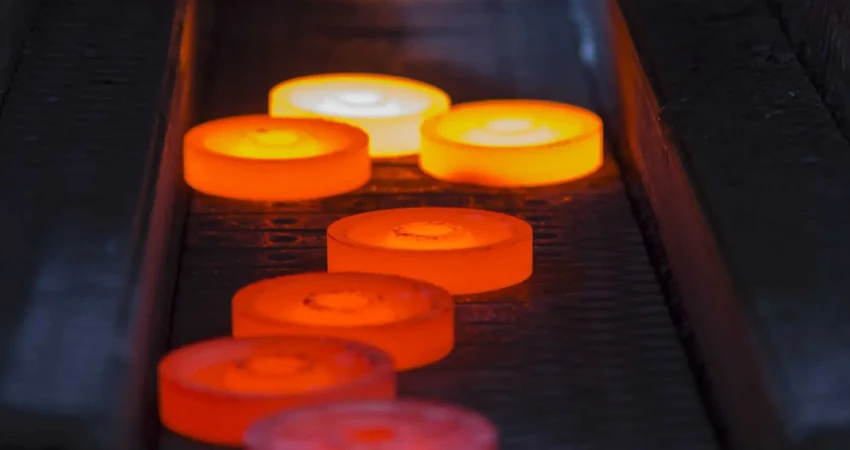
Understanding the Forging Process and the Difference Between the Two Main Methods
Forging is a metal forming process in which a piece is shaped by applying high pressure. This method is primarily done in two ways: hot forging and cold forging. In hot forging, the metal is first heated to a specific temperature and then shaped. In cold forging, the deformation occurs at room temperature.
Hot forging is suitable for producing large-volume parts with complex shapes and high strength, while cold forging is mainly used for mass production of precise parts such as bolts and screws.
Choosing the Appropriate Method Based on Customer Needs
Sepahan Pich Company, equipped with both hot and cold forging technologies, selects the suitable method depending on the type of order and the application of the part. This flexibility increases the final product quality, reduces costs, and optimizes production time.
For example, parts used in vehicle suspension systems, which require high strength, are usually produced by hot forging, whereas delicate and precise bolts for assembling internal components are made by cold forging.
The ability to choose between these two methods is one of Sepahan Pich’s competitive advantages that distinguishes it from many other manufacturers.